Most people find out the hard way that the Elephant Orphanage doesn’t take walk-ins anymore. You show up, kids excited, and the gate turns you away because you didn’t book. So before anything else: go to sheldrickwildlifetrust.org, book your slot, and get the confirmation email on your phone. Then we can talk about the rest of Karen.
Karen is a great family half-day in Nairobi, with two animal experiences within 5 km of each other that work for children of almost any age.
The Elephant Orphanage: The One That Requires a Plan

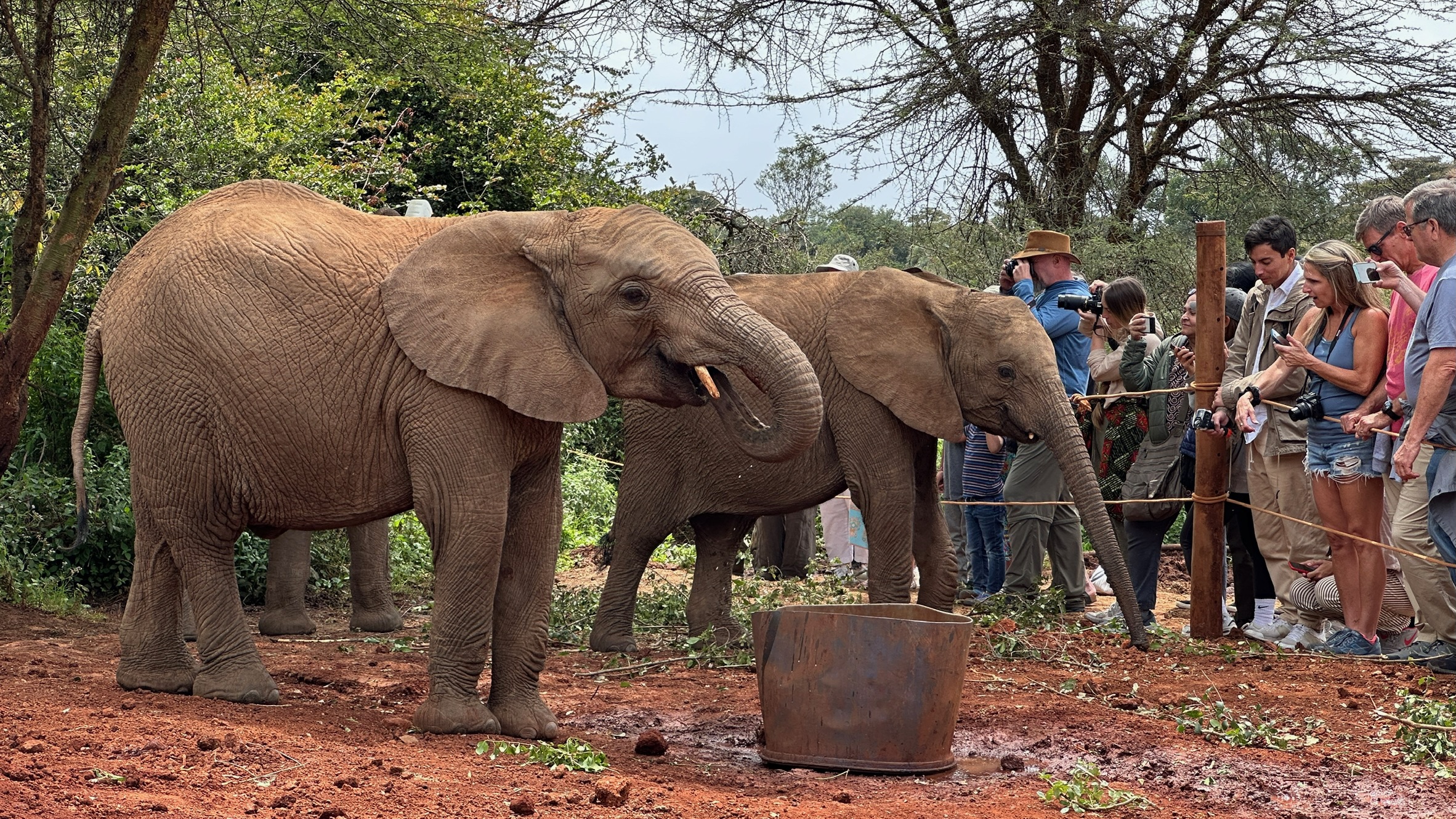
The David Sheldrick Wildlife Trust Nairobi Nursery is a rescue facility for orphaned elephants being rehabilitated for eventual release back into the wild. The public viewing window is 11am to noon, seven days a week except Christmas Day, and that’s the only hour there is: if you miss it (or if you’re late!), you miss it. It can take a while to get through the National Park entrance, so give yourself plenty of extra time before 11am so you’re not late. You’ll also want to get there early so you can snag a good spot right up at the front (and maybe be able to touch the baby elephants if they brush by you!)
How to book
Book directly at sheldrickwildlifetrust.org/nursery-visit. No more walk-ins (that, unfortunately, is a thing of the past), and you need a confirmed booking to get past the KWS Mbagathi Gate, so book at least a few days ahead since slots fill on weekends and school holidays.
There are some organized tour companies that offer hotel pick-up for out-of-town guests. Since you have to pay the Nairobi National Park entrance fee anyway, it might be worth just turning it into a safari adventure day and exploring the national park while you’re at it (you paid for it!).
–> Book a full package on GetYourGuide
What it costs (as of May 2026)
There are two separate fees. Most people only know about one.
SWT Nursery donation (paid in *cash* at the nursery on the day):
- Resident adult: KES 2,000
- Resident child: KES 500
- Non-resident adult: USD 20 (or KES equivalent)
- Non-resident child: USD 5
KWS Nairobi National Park entry (paid online in advance at kwspay.ecitizen.go.ke):
- Kenyan/EA citizen adult: KES 1,000
- Kenyan/EA citizen child: KES 500
- Kenyan resident adult: KES 1,350
- Kenyan resident child: KES 675
- African adult: USD 40
- African child: USD 20
- Non-resident adult: USD 80
- Non-resident child: USD 40
For a Kenyan family of two adults and two school-age children, the total is around KES 8,000. It’s not a cheap everyday thing but it’s a great experience to do at least once.
What to expect
The viewing area is an open clearing where keepers bring out the youngest elephants first; they’re playful, loud, and they roll in the mud. You’re not supposed to reach out to touch them, but if they walk past you, you’re allowed to pet them.
The whole visit is about 45 minutes to an hour, including the ride from the KWS gate to the nursery. You can also “adopt” an elephant for a minimum contribution of US$50 per year. Read here for more details.
Practical checklist: Arrive at KWS Mbagathi Gate at least by 10:30am. Have your KWS payment receipt on your phone. Have your SWT booking confirmation ready. Bring cash for the nursery donation because the SWT doesn’t take cards.
The Giraffe Centre: The Easy, Affordable, Any-Day Option

If the Elephant Orphanage requires a plan, the Giraffe Centre requires almost nothing. You can walk in any day between 9am and 5pm (no booking needed), pay at the gate by card or M-Pesa (cash isn’t accepted), and you’re inside within minutes. There are third-party booking sites but it’s really not necessary, and you don’t need a guide since everything’s written out well. The main part of the experience is feeding the giraffes anyway!
What it costs (2026)
- Resident adult: KES 400
- Resident child (3-12 years): KES 200
- Non-resident adult: KES 1,500
- Non-resident child: KES 750
- Under 3: Free
A Kenyan family of four pays KES 1,200.
What to expect
There is a raised wooden platform where you feed the Rothschild giraffes by hand. Every ticket includes a bowl of feeding pellets. The giraffes come in close, and their tongues are absolutely enormous! We’ve seen some folks who put the feeding pellets in their mouth and “kiss” the giraffes but that has never been of interest to us 🙂 Most kids are either thrilled or briefly terrified, then thrilled.
A hidden gem we like to do every time we’re out that way is the free 38-acre nature trail across the road. For families with older kids who like nature, it’s definitely worth doing; there’s a beautiful stream to explore and it’s quiet.

Plan for 45 minutes to 1.5 hours depending on if you do the walking trail.
Tip: The Giraffe Centre and the Elephant Orphanage work well together in a single morning. Do the orphanage from 11am to noon, then drive 10 minutes to the Giraffe Centre. We usually head for lunch at Tin Roof Langata or Cultiva after.
Karen Blixen Museum: For the Right Child at the Right Age
The Karen Blixen Museum is the colonial-era farm of the author of Out of Africa, now run by the National Museums of Kenya. Admission fees were updated in May 2026:
- Kenyan adult: KES 550
- Kenyan child: KES 300
- Kenyan resident / Rest of Africa adult: KES 1200
- Kenyan resident / Rest of Africa child: KES 800
- Non-resident adult: KES 2200
- Non-resident child (under 16 years): KES 1200
Honest take: this works well for children who can handle a slow guided walk through an old house and are interested in history or wildlife imagery. For younger children, you may spend more time outside than in the house, but there’s lots of green space to run around and you can do a short forested walk to see some of the old machinery from the coffee farming days. It’s a five-minute drive from the Giraffe Centre, so it’s easy to add if the kids still have energy.
Kazuri Beads: Worth a Stop If You Have the Time
Kazuri Beads runs free workshop tours at their Karen headquarters. You can watch artisans make ceramic beads by hand, which holds attention for longer than you’d expect. There is also an on-site coffee shop serving Spring Valley Coffee and pastries from Soul Sisters Bistro, plus a retail space where you can buy pieces directly.
For younger children, the workshop is engaging for about 20 minutes. For older kids who are into art or craft, the jewellery-making class (booked separately) is a genuinely good activity. The coffee situation makes it worth stopping for parents regardless.
Open Monday to Saturday.
Where to Eat in Karen

Karen has solid options for lunch or an early dinner after a morning of animals. A full guide to Karen restaurants is coming to this blog shortly.
For now, the short list: Tin Roof (there are two branches; the Langata one has a better playground and is closer to Giraffe Center); Cultiva has a relaxed outdoor setup that works well with children though they don’t have a playground. Their food and cocktails are delish! They get really busy so best to book in advance.
Getting to Karen: What to Know
Karen is about 12-15 km from central Nairobi, but the drive can take 30-40 minutes from Westlands or Kilimani depending on traffic. From Karen itself, the Giraffe Centre and Elephant Orphanage are a 5-10 minute drive apart.
Bolt or Uber works fine for both. If you’re driving, parking at both attractions is free.
The Honest Verdict
The Elephant Orphanage and the Giraffe Centre are two “must do at least once” with children in Nairobi. The Giraffe Centre is accessible and affordable (although, if your kids are in a Kenyan school, they’ll also most likely go with a school field trip at least once too :).
The combination of both in a single morning, followed by lunch in Karen, makes for a complete day out without having to drive halfway across the city.
Best for: Children of almost any age. The Elephant Orphanage works from around age 3 upward. The Giraffe Centre works even with toddlers.
What to skip: On a tight schedule or with very young children, leave the Karen Blixen Museum for another day.
Frequently Asked Questions
How much does it cost to visit the Elephant Orphanage in Nairobi in 2026?
Kenyan residents pay two separate fees. The Sheldrick Wildlife Trust nursery donation is KES 2,000 per adult and KES 500 per child, paid in cash on arrival. The KWS Nairobi National Park entry fee is KES 1,000 per adult and KES 500 per child, paid online in advance at kwspay.ecitizen.go.ke. A family of two adults and two children pays around KES 8,000 total.
Do you have to book the Elephant Orphanage in advance?
Yes. Walk-ins aren’t allowed. Book at sheldrickwildlifetrust.org. Have your booking confirmation ready at the KWS Mbagathi Gate. Book at least a few weeks ahead, especially during school holidays and weekends.
How much does the Giraffe Centre cost for Kenyan residents in 2026?
KES 400 per resident adult and KES 200 per resident child aged 3-12. Children under 3 are free. Cash isn’t accepted; pay by card or M-Pesa at the gate. The centre is open daily from 9am to 5pm, no advance booking required.
Can you visit both the Elephant Orphanage and the Giraffe Centre in one day?
Yes. The orphanage runs from 11am to noon. The Giraffe Centre is about 10 minutes away and open until 5pm. Visit the orphanage first, then go straight to the Giraffe Centre. Both fit easily into a single morning.
How much does the Karen Blixen Museum cost in 2026?
KES 550 for Kenyan adults and KES 300 for children, as of the revised National Museums of Kenya fees effective May 7, 2026.
Is a day in Karen worth the drive from central Nairobi?
Yes. Plan the morning around the 11am Elephant Orphanage slot, add the Giraffe Centre immediately after, and have lunch in Karen. You’ll be back home by early afternoon with a full day behind you.