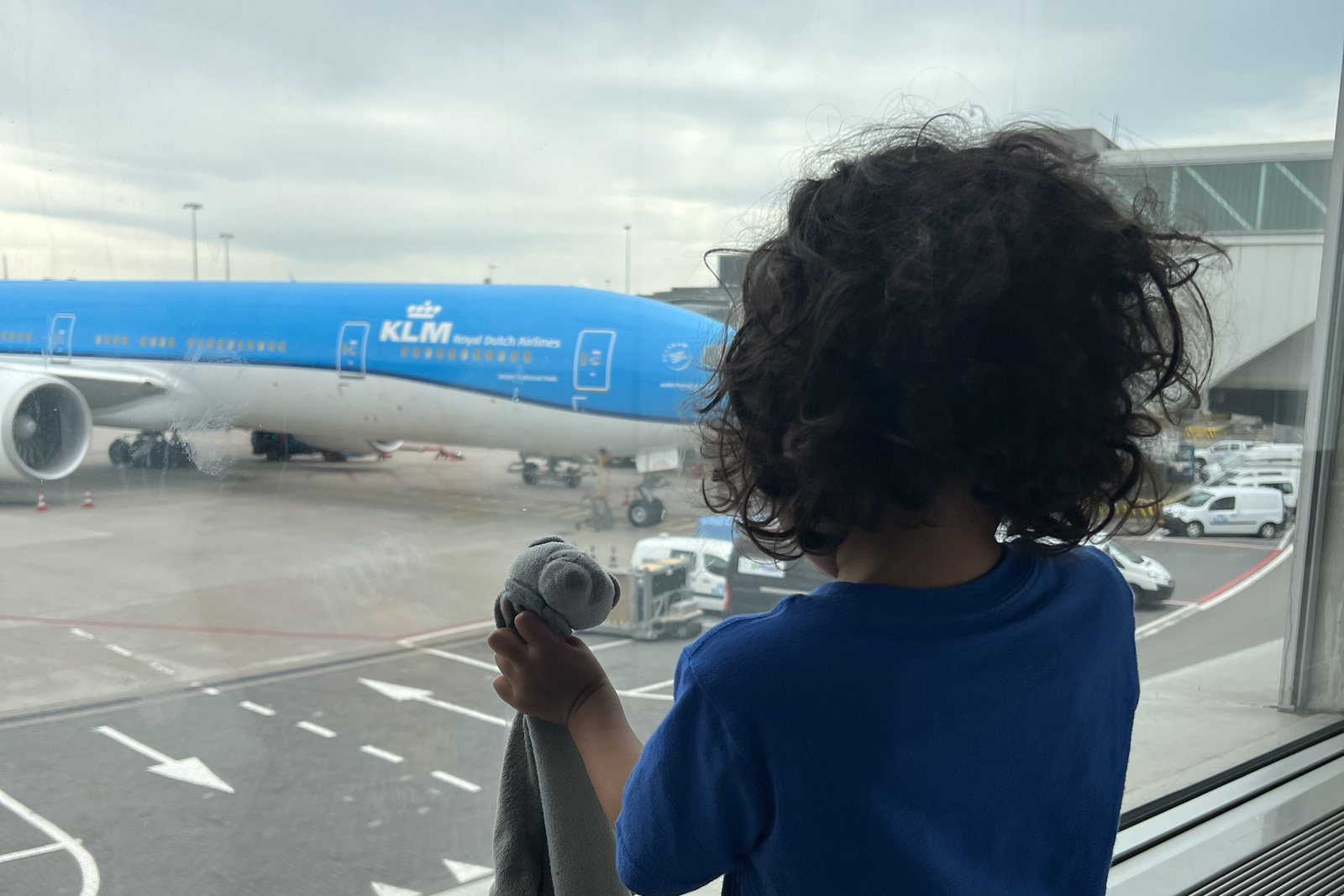
The question we could not answer from California was not whether we would cope with Nairobi. My husband is Kenyan, I had lived here before, and we both knew exactly what daily life here feels like, from the traffic to the Saturday errands. The question was whether our kids would love it the way we do. They were 7 and 3 when we moved in July 2023, and neither of them had lived in Kenya before.
If you are weighing a move to Kenya, or planning a long visit to test the idea, this is how we did it: no moving company, no shipping container, no relocation service, four large suitcases, our initial month in an Airbnb, and a school application that started seven months before we landed.
Why we skipped the movers and the relocation service
We wanted the move to be small. Shipping a household across two oceans is expensive and takes a lot of coordination, and getting rid of things forced us to decide what we actually cared about. When we moved from Kenya in 2015 for the US, we only moved with suitcases. We decided to do the same thing again and kept four suitcases as our hard limit.
I get asked whether we used one of the relocation services that market to families moving to Kenya. We did not, so I cannot recommend one. What we used instead was an Airbnb for the first month as our landing “home”, a real estate agent to help us look for a longer-term rental, and a school application that we had already submitted before we arrived to Kenya.
What stayed in California and what came with us
We got rid of as much as we could while we were in California. The rest is still in the basement of our house in the US, which is rent out to tenants, so for now, storage costs us nothing.
The suitcases held a core set of clothes for the four of us, the documents we could not replace, and the things that are hard to get in Kenya or cost much more here. Some of that list is random. The kids’ STEM building toys, which are either very expensive or impossible to find. Electronics cost more here as well, so I bought an iPad for Aya just before we left.
The other thing I tell folks: the suitcases never stop. Every time I travel to the US I fly out with two empty suitcases and come back with both of them full, and there is still always something I wish I had room for.
Packed and on the move, heading to the airport as we bid goodbye to California in June 2023.
If you forget something: shipping from the US
Services like Kentex Cargo let you ship to a US warehouse, and they bring your parcels to Kenya for you to collect in Nairobi (or have them delivered). That is how we get a lot of things now when we do not have a trip coming up. At the time of writing, Kentex lists air freight at 7 to 14 working days, with rates starting at USD 17.99 a kilo, so check their site for current prices before you plan around it. It changes how you pack: if you forget something, it is not the end of the world.
Getting the kids into school: our Braeside timeline
We applied to one school, Braeside in Lavington (part of the Braeburn group), and we were lucky that it worked out, because our kids love it. We did not have a backup, so I would not call that a strategy to copy.
Here is what the process looked like for us:
November 2022 and March 2023: Cold emails to several schools to ask for information. Video calls with the school while we were still in California, to ask questions and start the application.
Early July 2023: in-person entry assessments for both kids, a few days after we landed. Our older child was starting Year 3, and I worried he might not be at the right level. He was fine. Our younger one was starting Foundation Stage 1 at age 3.
A few days later: a written offer, with deadlines for the first term’s fees and a list of documents: passport photos, the latest school report, a leaving letter from the previous school, and a medical form.
Early August: we paid the first term and dropped off the paperwork. Fees change every year, so check the latest on the Braeside Lavington fee structure page.
29 August 2023: first day of term.
Two things to know if your kids come from a small or informal school. My younger one had only attended a home daycare, so there was no report or leaving certificate, and my older one’s school had no formal grades. I told the school up front and asked his previous teachers for a letter (which they shared on email). Ask early, because teachers may be on holiday.
I will publish my own post on the international schools in Nairobi soon. Until then, The Expat Mummy has an older guide to international schools in Kenya from 2020, so treat the fees and details as out of date and check each school’s website. Braeside’s admissions steps are on its admissions page.
The Airbnb month
We booked an Airbnb for the first month, and it was the best decision of the move. It gave us a base with no commitment while we worked out where we wanted to live, and the kids had somewhere consistent to land. During that month we house hunted with a rental agent (I am writing a separate post on how to find a good one in Nairobi, because many will waste your time), and at the end of it we moved straight from the Airbnb into the house.
If you are testing a move, I recommend you copy this structure: (at least) one month, one base, no commitments, with house viewings and school visits as the real agenda.
Buying furniture and appliances locally
We bought furniture here in Kenya instead of shipping any, and we were lucky that the exchange rate was in our favour in 2023, which felt like a discount on everything. Beds came first. We custom-ordered ours from a brand I found on instagram, Furniture Zoo, who I love (tell Emily I recommended her if you reach out!). I put the order in straight away because custom beds take time. I leaned on her hard to have them ready for the day we moved in, and they arrived the night we needed them, so nobody had to sleep on the floor. Whew!
Along with the bed frames, we needed mattresses and bed nets, because that house had a lot of mosquitoes. A fridge and stove, which we bought at Hotpoint, were also essential first purchases. I am working on a separate guide to buying things in Nairobi… hang tight!
The kids’ first summer
Our first long holiday here had no all-summer camp arrangement, because that is not how Nairobi works (school holiday guide coming soon!). The kids did a couple of days of gymnastics camp and otherwise we explored the city together. I was still working US hours, which turned out to be an accidental gift: my mornings were free for the kids and my calls fell in Nairobi afternoons and evenings. If you are moving or visiting with a job in another time zone, talk to your boss to see if you can flip your day like that.
If you are testing a move with a long visit
I think a month is a good minimum if you want the visit to tell you anything. Set up the same way we did: an Airbnb as a base, school visits arranged before you arrive, Kenya is so fun with littles so don’t get too serious and carve time for some fun too (my Karen guide is a good list to start with). Here’s a practical setup from my first 48 hours in Nairobi guide to help with your first two days.
Timing matters, and it depends on the school. Kenyan national-curriculum schools start their year in January. Most international schools, including ours, start in late August or September and follow British or American calendars, with the long holidays in July and August and again in December. If you come in June, schools are still in session, which is useful if you want to visit a few while classes are running. If you come in July or August, the holiday camps are running, but classrooms are empty.
FAQ: moving to Kenya from the US with kids
Do I need a relocation service to move to Kenya?
No. We moved from California in July 2023 with two kids, no movers, no shipping container and no relocation company. A month in an Airbnb, a rental agent and a school application started months earlier covered everything.
How many suitcases should we bring?
We brought four large suitcases for a family of four: core clothes, things that are hard or expensive to buy here, and documents we could not replace. The limit forces real decisions. If you forget something, you can ship it later through a US-warehouse service.
When should we apply to schools?
Start months before you land. We began conversations seven months before our move, took in-person entry assessments a few days after we landed, and had a written offer within days. Ask each school what documents it needs, especially if your child has no formal school report.
When does the school year start in Kenya?
Kenyan national-curriculum schools start in January. Most international schools start in late August or September. Our school’s year began on 29 August 2023.
Can we visit in June to August to test a move?
Yes. In June most international schools are still in session, so you can visit them. In July and August the long holiday runs, and camps operate by the day or week rather than for the whole summer.
Was it worth doing it this way?
For us, yes. Keeping the move small was deliberate, and it meant fewer decisions chasing us across the ocean and a month to find our feet before committing to a house. If you have furniture you love or equipment you cannot replace, this is not your method, and you should look into a shared container. If you want a clean start, four suitcases and an Airbnb will get you there.
The hotel front desk clerk at the Holiday Inn Express in Mitchell, South Dakota, did not have a folio to print for us. We had booked the room on IHG points, and the system doesn’t generate a printable receipt for reward stays. She looked at us, looked at the screen, and then hand-wrote onto a piece of paper that we had stayed the night, with both our names on it. That handwritten note is now part of our domicile file.
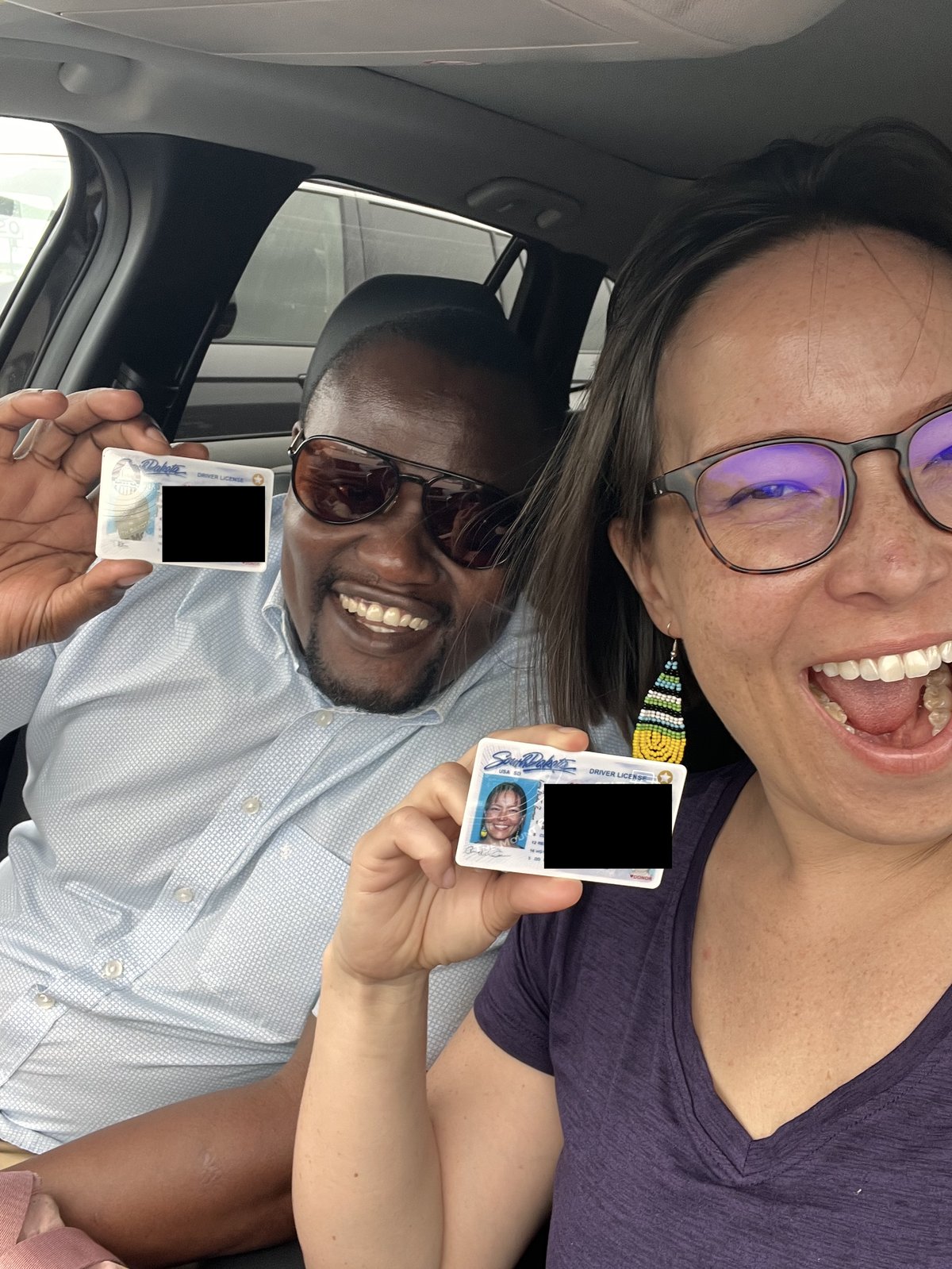
We did it. South Dakota driver’s licenses in hand, personal info redacted for the photo.
This August, we flew from Nairobi to Chicago for a summer trip I’d been looking forward to for months. Deep dish pizza, my daughter’s first baseball game, time in Wisconsin with my parents on the land my paternal great-grandmother brought the family to from Lithuania three generations ago. And somewhere in the middle of all that, Laban and I took a one-day detour to South Dakota to visit a DMV.
Not Mount Rushmore. Not the Badlands. A DMV in Mitchell, South Dakota, that handles the kind of thing most American expats never think about until it catches them. It took us almost three years to finally do this, and the actual trip was smoother than I expected. If you’re an American living abroad who moved from California, New York, Illinois, or any other high-income-tax state, this post covers what we did, what we learned, and whether it’s worth your time.
The Problem Most American Expats Don’t Know They Have
Everyone who moves abroad knows they still have to file US federal taxes. The United States taxes its citizens on worldwide income regardless of where they live. That’s unusual, mildly annoying, and just a fact of American citizenship.
What most people don’t know is that state-level taxes are a completely separate and more complicated question.
When you move out of a US state, you don’t automatically stop being a resident of that state for tax purposes. Domicile, under California law (R&TC Section 17014), is defined as the place where you intend to make your permanent home. The California Franchise Tax Board (FTB) takes an expansive view of this. If you moved from California to Kenya, or Germany, or anywhere else, without formally establishing domicile in another state, California can argue your domicile never changed. And California taxes worldwide income.
FTB Publication 1031 (2025 edition) outlines the specific factors California uses to determine domicile. The list includes the location of your driver’s license, where your vehicles are registered, where you keep your most important personal belongings, where your professional licenses are held, and where you vote. Your driver’s license is one of the most visible and easily documented factors on that list.
Here’s our situation. In 2023, we moved back to Kenya after eight years in the US for my PhD. For the first year or so, we had the postal service forward our mail to my parents’. Practical, convenient, and not a long-term solution. About a year ago, we set up a proper mail forwarding address in South Dakota through a service built specifically for Americans living abroad and frequently traveling. The final step was the one we did in August: get to a South Dakota DMV, get South Dakota driver’s licenses, close the loop.
As long as our driver’s licenses said California, there was a live argument that California could claim our consulting and business income. Getting South Dakota licenses removes that argument.
Why South Dakota Specifically
South Dakota has no state income tax. Zero. It’s one of nine states in the US that doesn’t tax individual income.
It also has a residency program specifically designed for Americans without a permanent US address: people living abroad, full-time travelers, people between addresses. The program is supported by private mail forwarding services, most of which are based in Spearfish in western South Dakota. SDRC (South Dakota Residency Center) and America’s Mailbox are the two most established ones. The state’s official relocation arm, ChooseSD, promotes this as a feature.
The requirements to establish South Dakota residency are three:
A South Dakota mailing address, obtained through a mail forwarding service
One overnight stay in South Dakota
A visit to any South Dakota DMV for a driver’s license
That’s it. One night. One DMV visit. No apartment lease, no utility bills, no proof of extended time in the state. The program was built for people whose permanent life is somewhere else.
For the mailing address step, the two established services in Spearfish are SDRC (South Dakota Residency Center) and America’s Mailbox. Both are built specifically for Americans living abroad and full-time travelers, and both handle the mail scanning and forwarding that makes a remote US address work. We set ours up over a year ago and it’s been reliable. There are also virtual mailbox platforms like Anytime Mailbox and Traveling Mailbox that aren’t tied to one physical location, if you want to compare options before committing.
You Don’t Have to Go to Spearfish
Almost everything written about South Dakota domicile assumes you have to make your way to Spearfish, where the mail forwarding services are based. People fly into Rapid City, rent a car, drive 45 minutes to Spearfish, stay at the KOA, go to the Spearfish DMV, done.
But that’s not the rule. The rule is that you need one overnight stay in South Dakota and a visit to any South Dakota DMV. The DMV doesn’t have to be in the same city as your mailbox service. Your mailbox address is in Spearfish. You can get your license in Mitchell.
We proved this on our trip. We didn’t drive eight hours from Wisconsin to Mitchell. We drove four and a half hours from Rhinelander to Minneapolis, flew 30 minutes to Sioux Falls, rented a car, and drove one hour to Mitchell. The Mitchell DMV isn’t near Spearfish. It doesn’t matter. Any South Dakota DMV works.
And once I started looking at reviews for the Mitchell DMV, the decision was easy: people drive from Sioux Falls to go to Mitchell because the Mitchell DMV has significantly better reviews. Shorter waits, smoother process, friendlier staff. We booked our appointment online in advance at dps.sd.gov and went first thing in the morning.
How We Got to Mitchell: Wisconsin to Minneapolis to Sioux Falls
Here’s what the day actually looked like, because the logistics are the part that feels overwhelming from Nairobi but turned out to be manageable from Wisconsin.
We left Rhinelander by car in the morning and drove about four and a half hours to Minneapolis. We had extra time before our flight, so we stopped at Minnehaha Falls, which is a lovely little park right in the city and a nice way to see a slice of Minneapolis without committing to a full day there.
Walking the boardwalk along Minnehaha Creek in Minneapolis during our layover.
After that, we headed to the airport and spent a few hours in the lounge using our Priority Pass access (honestly one of the better perks of the travel cards we carry, and a good way to wait out a flight without spending on airport food).
Priority Pass lounge at Minneapolis-St Paul. Worth the stop when you have time to kill before a short flight.
The flight from Minneapolis to Sioux Falls is about 30 minutes. We traveled with carry-on only, which meant no bag pickup on the other end. We landed, walked to the rental car counter, and were on the road within minutes. Sioux Falls to Mitchell is about one hour by car, straight west on I-90.
On the road from Sioux Falls to Mitchell. Navigation said 61 miles to go.
It’s flat, open farmland the whole way, which is its own kind of beautiful if you’re used to Nairobi traffic.
The view from the car on the drive into Mitchell.
We stayed at the Holiday Inn Express in Mitchell, booked on IHG points (we had about 36,000 points available, which covered the night). The hotel is in a small compound with a Mexican restaurant right across the parking lot, and I’ve got to say, it was some of the best Mexican food we’ve had in a long time. Huge margaritas, excellent food, and the convenience of walking across a parking lot after a long travel day. If you stay at the Holiday Inn Express, eat there.
Tacos at the Mexican restaurant across the parking lot from the Holiday Inn Express. Highly recommend.
The Mitchell DMV: 30 Minutes, In and Out
Our appointment was at 10:30. We got there around 9:15 because we were nervous about missing it, and the DMV is in a small area that didn’t look like a big DMV building from the outside. That made us worry at first, but it turned out to be a good thing. There was no crowd.
I had checked in online the night before, which sent me a text message. When we arrived, I replied to the text to say I was there, and they called us over. We filled out the driver’s license application there at the DMV (they provide the forms), and we also filled out the residency affidavit there (they provide that too). You don’t need to bring these forms pre-filled, but you do need to bring the documents that go with them.
Here’s the part I want to flag: it’s supposed to be one appointment per person. I had only made one appointment to cover both of us, which isn’t how it works. The woman at the counter was kind about it and just added my husband as a walk-in, so you can do walk-ins, but I’d make separate appointments for each person if you can. It’s less stressful.
The two women running the counter that morning were, hands down, the reason this worked. They handled the queue impeccably (there wasn’t a queue, honestly, because they were so fast and so kind and so effective). They made us laugh. I’ve been to a lot of DMVs in my life, and this was the best experience I’ve ever had. It’s worth driving the extra hour to Mitchell just for this.
One small scare: my husband’s eyes aren’t perfect, and he had a little trouble with the vision test. That was a frightening moment because we’d traveled so far just for this DMV, and a failed vision test would have meant no license. The woman was understanding, his results weren’t bad enough to fail, and she approved it. But if you or your partner have any vision concerns, get your eyes checked before you make the trip. It would be a rough thing to travel all that way and get stopped at the vision test.
We were in and out within 30 minutes. They printed our driver’s licenses right there on the spot. No mailing, no waiting for something to arrive at our SD address. We walked out with physical licenses in hand, and we were done by 10:00.
What to Bring (and What Tripped Us Up)
Here’s what you need at the DMV:
US passport (original, not a copy)
Proof of Social Security number (your SSA card, a W-2, or a 1099)
Your South Dakota mail service agreement showing your SD address
Your hotel receipt from the overnight stay in South Dakota
A notarized residency affidavit (which you can do at the DMV)
Your prior state driver’s license to surrender (if you still have it)
Both adults in a couple need to go in person. If you no longer have your previous state driver’s license, that’s fine. South Dakota can cancel your old license through the interstate Driver License Compact without you needing to produce the physical card. I’d lost mine years ago and it wasn’t a problem.
The one thing that tripped us up was the hotel receipt. We booked the Holiday Inn Express on IHG points, and when we asked for a folio at checkout, the system couldn’t print one because reward stays don’t generate a standard folio. This is a real problem for domicile documentation, because the hotel receipt is one of the things you need to show you spent the night in South Dakota.
The front desk clerk figured it out. She hand-wrote on a piece of paper that we’d stayed the night, with both our names on it, and that worked. But if you’re booking on points, ask about this at check-in, not at checkout. And make sure both names are on the reservation. If only one name is on the booking, only one of you has proof of the overnight stay.
What South Dakota Domicile Doesn’t Fix
To be clear: establishing South Dakota domicile doesn’t make you exempt from taxes in every state.
If you own property in California that generates rental income, you’ll still file California taxes on that rental income every year. California taxes California-source income regardless of where you’re domiciled. A South Dakota address doesn’t change your obligation on income earned from California sources.
What South Dakota domicile does is protect your other income: consulting fees, business income, investment returns, anything that isn’t California-source. California can only tax a non-resident on income from California sources. Once you’re a South Dakota resident rather than a California resident, your worldwide income no longer belongs to California. That’s the distinction that matters.
Is This Relevant to You?
This post is specifically useful if you:
Are a US citizen living abroad who moved from a high-income-tax state: California, New York, Illinois, Oregon, or Minnesota are the most common ones
Left your home state without formally establishing domicile somewhere else
Are currently using a family member’s address in a high-tax state as your US mailing address
Still have your old state driver’s license on record
If you originally lived in Texas, Florida, or Nevada before moving abroad, you’re likely fine. Those states have no income tax, and your existing domicile already protects you.
If you’re in a gray area, meaning you left a high-tax state but never sorted out where you’re officially domiciled now, that’s exactly the situation this addresses. The California FTB has an active program for reviewing former residents, and J. Lunt, OTA Case No. 230112468 (2025) shows how California pursues domicile questions when someone leaves the state without clearly establishing residency elsewhere.
The Flight Back
After the DMV, we drove the one hour back to Sioux Falls, returned our rental car, and waited at the airport. We had lunch there and then flew the 30 minutes back to Minneapolis.
The short flight back to Minneapolis. Licenses in hand, domicile closed.
We drove back from Minneapolis straight through, and we were back to Rhinelander, Wisconsin by 7:30 PM in time for dinner with our kids and my parents.
Frequently Asked Questions
Do I still need to file state taxes if I live abroad?
It depends on your last US state of residence before moving abroad. If you lived in a state with income tax (like California or New York) and haven’t formally changed your domicile, that state may still consider you a resident and may still tax your worldwide income. Living abroad doesn’t automatically sever state residency. You need to take a deliberate step to establish domicile somewhere else.
What state should American expats claim as their domicile?
South Dakota is the most popular choice for Americans living abroad because of three factors: no state income tax, the lowest physical presence requirement of any no-income-tax state (one overnight stay), and an established support structure through private mail forwarding services in Spearfish. Florida and Texas are also valid options but require more physical presence to document.
How do you establish South Dakota residency as an expat?
Three steps. First, set up a South Dakota mailing address through a mail forwarding service (SDRC and America’s Mailbox are both based in Spearfish and are the two most established options; virtual mailbox platforms like Anytime Mailbox or Traveling Mailbox work as alternatives if you want a provider that isn’t tied to one location). Second, spend one night in South Dakota. Third, visit any South Dakota DMV with your passport, SSN documentation, and mail service agreement. You don’t have to go to the same city as your mail forwarding service. Both people in a couple must go in person. Book your appointment online in advance at dps.sd.gov, and make a separate appointment for each person.
How long does the Mitchell DMV take?
Our entire visit took about 30 minutes, and that included filling out the application and affidavit at the DMV. We had a 10:30 appointment, arrived around 9:15, and were out by 10:00 with printed licenses in hand. The Mitchell DMV is staffed by people who are fast, kind, and effective. It’s worth driving the extra hour from Sioux Falls to use this DMV instead of others.
What happens if you book your South Dakota hotel on points?
Reward stays typically don’t generate a printable folio, which is a problem because the hotel receipt is your proof of the overnight stay. Ask at check-in, not checkout. The Holiday Inn Express in Mitchell hand-wrote a receipt for us with both our names on it, which worked. Make sure both names are on the reservation when you book.
Can California tax me if I live in Kenya?
California can tax your worldwide income if it considers you a California domiciliary. If you moved from California without formally establishing domicile in another state, and still hold a California driver’s license or have other California ties, the FTB may argue you’re still a California resident. FTB Publication 1031 (2025 edition) outlines the specific domicile factors California examines.
What documents do I need for South Dakota residency at the DMV?
US passport, proof of Social Security number, your South Dakota mail service agreement, a receipt from an overnight stay in South Dakota, and a notarized residency affidavit (which you can do at the DMV). If you still have your prior state driver’s license, bring it to surrender. A hotel receipt works for the overnight stay proof, but if you book on points, ask about the folio issue at check-in.
Which South Dakota DMV should I use?
Any of them. You don’t have to go to the DMV nearest your mailbox address. We used Mitchell and it was the best DMV experience I’ve ever had. People drive from Sioux Falls to Mitchell because the reviews are better. Spearfish is the traditional choice if you’re already in western South Dakota for the mail forwarding services, but if you’re coming from the midwest or flying into Sioux Falls, Mitchell makes more sense. Book an appointment online before you go, one per person.
The Verdict
This isn’t a tax loophole. It’s a legal process designed for people who actually don’t live in the United States and need a valid US domicile for driver’s license, banking, and tax purposes. South Dakota built this program deliberately. The state gets residents on paper; the residents get legal clarity and a no-income-tax domicile.
For us, the whole detour was one day. Drive from Wisconsin to Minneapolis, fly to Sioux Falls, drive to Mitchell, sleep one night, DMV in the morning, drive back to Sioux Falls, fly back to Minneapolis, drive back to Rhinelander. We were back by 7:30 PM in time for dinner with our kids and my parents. The DMV itself took 30 minutes.
Looking at it from Nairobi, the logistics of getting to Mitchell, South Dakota feel overwhelming. Looking at it from Wisconsin, where we were already going to be for three weeks, it was a one-day trip that we slotted into the middle of a family vacation. If you’re already planning to be in the US for any reason, and you moved from a high-tax state, this is one of the highest-leverage things you can do with a free day.
Every American expat’s situation is different. What applies to us may not apply to you in exactly the same way, especially if your income structure is different or if you have state-specific obligations beyond a rental property. For your specific filing history and state obligations, talk to a US tax professional who specializes in expats.
We did it. We’ve got the licenses, the handwritten hotel receipt is in the file, and I’m still slightly in disbelief that the hardest part of a three-year project turned out to be a 30-minute visit to the nicest DMV staff I’ve ever met.
This post reflects our own experience and the information available as of August 2026. It isn’t legal or tax advice. Consult a qualified US tax professional for your specific situation.
Most international flights into Nairobi come through Addis, Doha, Dubai, or Amsterdam, which means by the time you clear JKIA customs and collect your bags you’ve been in transit for a while. Here’s what to set up in the first 48 hours, in order of priority.
Order groceries to be delivered
Since COVID-19, delivery has become much easier in Nairobi and this includes groceries. Honestly, nowadays I mostly order my groceries delivered since I get so overwhelmed by in-person grocery shopping and I hate waiting in queues. Conveniently for new arrivals to Nairobi, grocery delivery doesn’t require local cash or M-Pesa since all the main apps take credit cards. The most straightforward is the Carrefour app (MAF Carrefour), which has good coverage across Nairobi and a wide enough range that you can stock a kitchen without much effort. If you want better quality produce, Greenspoon is worth it (a bit pricier, but genuinely good). Naivas also delivers now, though I haven’t tried their delivery service personally yet. Just download their apps on the app store, add your credit card and you can deliver!
Get a Safaricom SIM card
If you’re only here for a few days, an e-SIM through Airalo gets you data without queuing, though it gets expensive fast in Kenya for some reason. For anything longer than a week, just go to a Safaricom shop and get a physical SIM. The cost is low, and it gives you access to M-Pesa, which is the mobile payment system that runs basically everything in Kenya: paying rent, splitting a bill at a restaurant, buying curios at a local vendor, etc.
Bring your passport since you can’t get a SIM without it.
RE: which branch to go to: the Junction Mall and Yaya Centre Safaricom shops regularly have super long queues out the door. The one I always recommend is inside Lavington Mall (Lavington Green), which I think consistently has the shortest wait. Go during the workday, not at 5pm.
Getting around
Uber is ubiquitous here, affordable, and you can pay by credit card, so download it before you land and you’re set. Bolt also works and is useful as a backup when Uber surges. The drivers I talk to tend to prefer Uber (the pay is marginally better they say), but both are fine.
Worth knowing: Uber fares in Kenya are low, and what the platform pays drivers alone isn’t much. If someone drives you well, tip them.
If you’d rather have a fixed price and a driver holding your name when you land, there are companies that do pre-booked airport transfers well. If you’re comfortable with Uber, just use Uber. But for a first arrival, a driver holding your name is a genuinely better start.
Quick answers
Do I need M-Pesa right away?
Not immediately. Uber and the grocery apps take credit cards, so you can manage the first day without it. But you’ll want to get a SIM early to be able to use data on the go and register for M-Pesa while you’re at the Safaricom shop.
Can I get a Safaricom SIM at the airport?
Yes, there are kiosks at JKIA arrivals. The lines can be long and the experience isn’t always smooth (and you’ll probably be SO tired). I recommend going to Lavington Mall during the workday.
Do I need Kenyan shillings when I arrive?
While it’s helpful to have a bit of cash (there are ATMs at the airport that you can use), you can get further than you’d expect without cash. Uber, grocery delivery, and most larger restaurants and cafes all take credit cards. You’ll want shillings for markets and street food eventually, but it’s not urgent on day one.
Places open and close in Westlands faster than anywhere else in Nairobi, which is partly what makes it the city’s most interesting food neighbourhood. This is my current list, updated June 2026; I’ve eaten at most of these personally but have notated the ones I haven’t.
My new favorite in Westlands. The space reminds me more of Cape Town than Nairobi, which is either a selling point or a heads-up depending on where you stand on that aesthetic. The restaurant is tucked away on Maua Close, off the main Westlands strip and doesn’t even have a sign.
Unmarked entrance to Beit e Selam
Their most famous starter is the corn ribs, and they definitely earn the reputation. I’ve also had the creole rock cod, which comes with a papaya salad I liked more than I expected to. The lamb burger gets consistently strong reviews from everyone I know who’s been.
Skip the dessert menu; it’s the weakest part of the meal. A scoop of ice cream if you want something sweet at the end, but leave it there.
Their lunch offer includes one starter, one main, one dessert, and a drink for KES 3,650 as of June 2026. Closed Sundays.
About Thyme has been in Westlands since 2005 and they haven’t let their quality drop. The food is delicious, the space is well-kept, and they have live music on certain days of the week. Check their website at about-thyme.com for the current schedule before you go.
It’s not cheap, but it’s not pretending to be something it isn’t. This is a proper sit-down meal: the kind of place you take someone you want to impress, or book for a birthday when you want to get it right. Set in a multi-level garden off Eldama Ravine Road, it’s worth booking ahead. Closed Mondays.
My favourite Indian restaurant in Nairobi. I have tried others but keep coming back here, especially when we have out of town guests. Prices are on the higher end for an Indian restaurant in Nairobi, but the quality reflects it. Located on Parklands Road, opposite The Mall.
I think the original branch in CBD gives a more authentic experience but for visitors who are only in Nairobi for a short time and who might not make it to CBD, I’d send them to this K’Osewe branch so they at least get to taste some Kenyan food (samaki na brown ugali is my go to). This branch has beautiful deco and so it’s also great for a group dinner.
When we want to take the kids somewhere easy and not stretch the budget, Hashmi is where we end up. It’s always full, so go ready to wait a bit to be seated, but it’s reliably good. Indian BBQ: chicken tikka, kebabs, fresh naan, rich curries. If they have it available, get the tangerine juice. It’s a staple at Hashmi and people come back for it. More affordable than Open House; a solid family dinner without the bill shock.
Off Muridi Road, on the ground floor of a quiet mall you would drive past without thinking twice. Baladi does Syrian food, and they do it properly. The falafel shawarma is what I always order. Their garlic sauce is one of those things you want to pack up and take home (it’s that good). The other detail you won’t forget: they make Syrian coffee in the sand.
At the Brookside-School Lane Junction, Westlands. The only vegetarian pizza place I would actively recommend in Nairobi. The roasted garlic sauce is why I go. Don’t let the vegetarian-only menu put you off if you’re not vegetarian; the pizzas hold up on their own. Wood-fired, well-priced, worth the detour.
On the 18th floor of the Escada Building on Lantana Road, Westlands. Good views across the skyline, cocktails worth ordering, and a food menu where the salads stand out. Open from 6am, which also makes it work as a breakfast or co-working spot on quieter days.
On My List (I Have Not Been Yet)
EZO Restaurant at Stellato Mall, 2nd Floor, 42 Muthithi Road, Westlands is an Asian-inspired fine dining spot led by a Michelin-influenced Peruvian chef. Contemporary New-Japanese with Nikkei and pan-Asian influences. Several people whose food opinions I trust have flagged it as a strong date night. I’ll review it properly when I get there! View on Google Maps
Onza at Westgate is a Mediterranean-French fusion restaurant and bar that keeps coming up in date night recommendations. Open daily from noon. On my personal list; I’ll update this once I’ve been. View on Google Maps
A French Neobistro rooftop at The Mandrake in Westlands, with a 360-degree panoramic view of the city. Popular for date nights, happy hour, and group dinners. On the pricier side. I haven’t eaten here yet but have heard consistently good things about the view and the atmosphere. I’ll update when I do. Opens at 5pm Tuesday through Sunday.
Going Out
My clubbing days are behind me, so take this section as intel rather than a personal review. The names that keep coming up for a night out in Westlands:
Jekyll & Hyde is a moody, theatrically dark cocktail bar in a strip mall in Westlands. Known for inventive cocktails and a strong atmosphere. Open Tuesday through Sunday from 6pm. View on Google Maps
KODA Nairobi at Kenrail Towers on Ring Road is a serious two-room music venue with a Funktion-One sound system. More nightclub than bar. Thursdays to Saturdays only, from 9pm. View on Google Maps
11:11 also gets mentioned in the same conversations. I know less about this one; I’ll update as I hear more.
Coffee and Co-Working
A quick reference for working out of Westlands:
Coffee & Plant on General Mathenge Road is a plant-based cafe with both indoor and terrace seating. Strictly vegetarian and vegan menu. Good for a working morning or a lighter lunch. View on Google Maps
The Republic of Everyone at Bishan Plaza on Mpaka Road is a specialty coffee roastery with a strong East Africa sourcing story and very good baristas. The flagship cafe worth seeking out if you care about coffee. View on Google Maps
Knead Artisanal Bakery in Kanha Building, Westlands does excellent sourdough, pastries, and coffee. Solid co-working spot open daily from 8:30am. View on Google Maps
The Good Grain is a micro-bakery just off Waiyaki Way. A bit outside the main Westlands strip, but the bread is worth the drive and the space is good for a longer working session. They source their drip coffee from Hikuri Coffee. Open Monday to Saturday; closed Sundays. View on Google Maps
Connect Coffee has a location at Sanlam Towers on Waiyaki Way (near The Good Grain) and a second at The Riverfront on Chiromo Lane. Both are specialty roastery cafes. View on Google Maps
The Bottom Line
Westlands is where Nairobi’s food scene tests itself. Some of the places on this list won’t be here in a year. I’ll keep updating as I work through the ones still on my list.
Frequently Asked Questions
What is the best restaurant in Westlands, Nairobi?
beit é selam on Maua Close is one of the strongest options right now. Their lunch offer, one starter, one main, one dessert, and a drink for KES 3,650, is one of the better deals in the neighbourhood. About Thyme on Eldama Ravine Road is the long-standing reliable choice for a proper sit-down meal, operating since 2005.
Where can I get good Indian food in Westlands, Nairobi?
Open House Restaurant on Parklands Road (opposite The Mall) is consistently the best Indian restaurant in Nairobi. Expect to pay more than at a standard Indian restaurant; the quality reflects it.
What is the most affordable restaurant in Westlands for a family?
Hashmi Barbeque is a reliable choice for families who want good food without a large bill. Baladi Restaurant off Muridi Road is also excellent for shawarma at an accessible price point.
Are there good rooftop bars in Westlands, Nairobi?
270° Rooftop at the Escada Building on Lantana Road and Dijo at The Mandrake are both good options with views over the city. 270° Rooftop opens early and also works as a daytime co-working spot.
Where can I get good pizza in Westlands, Nairobi?
The Pizzeria at the Brookside-School Lane Junction is one of the best pizza options in Nairobi. It’s a vegetarian pizza place using a wood-fired oven, and the roasted garlic sauce is the standout.
What are good coffee shops in Westlands for working?
The Republic of Everyone (Mpaka Road), Coffee & Plant (General Mathenge Road), Knead Artisanal Bakery (Kanha Building), and The Good Grain (Waiyaki Way) are the main options in and around Westlands.
Is Westlands safe at night?
Westlands is one of Nairobi’s most active areas after dark and is generally considered safer than other parts of the city. Standard Nairobi precautions apply: use a trusted taxi or ride-hailing app rather than walking between venues late at night.
Most people find out the hard way that the Elephant Orphanage doesn’t take walk-ins anymore. You show up, kids excited, and the gate turns you away because you didn’t book. So before anything else: go to sheldrickwildlifetrust.org, book your slot, and get the confirmation email on your phone. Then we can talk about the rest of Karen.
Karen is a great family half-day in Nairobi, with two animal experiences within 5 km of each other that work for children of almost any age.
The Elephant Orphanage: The One That Requires a Plan
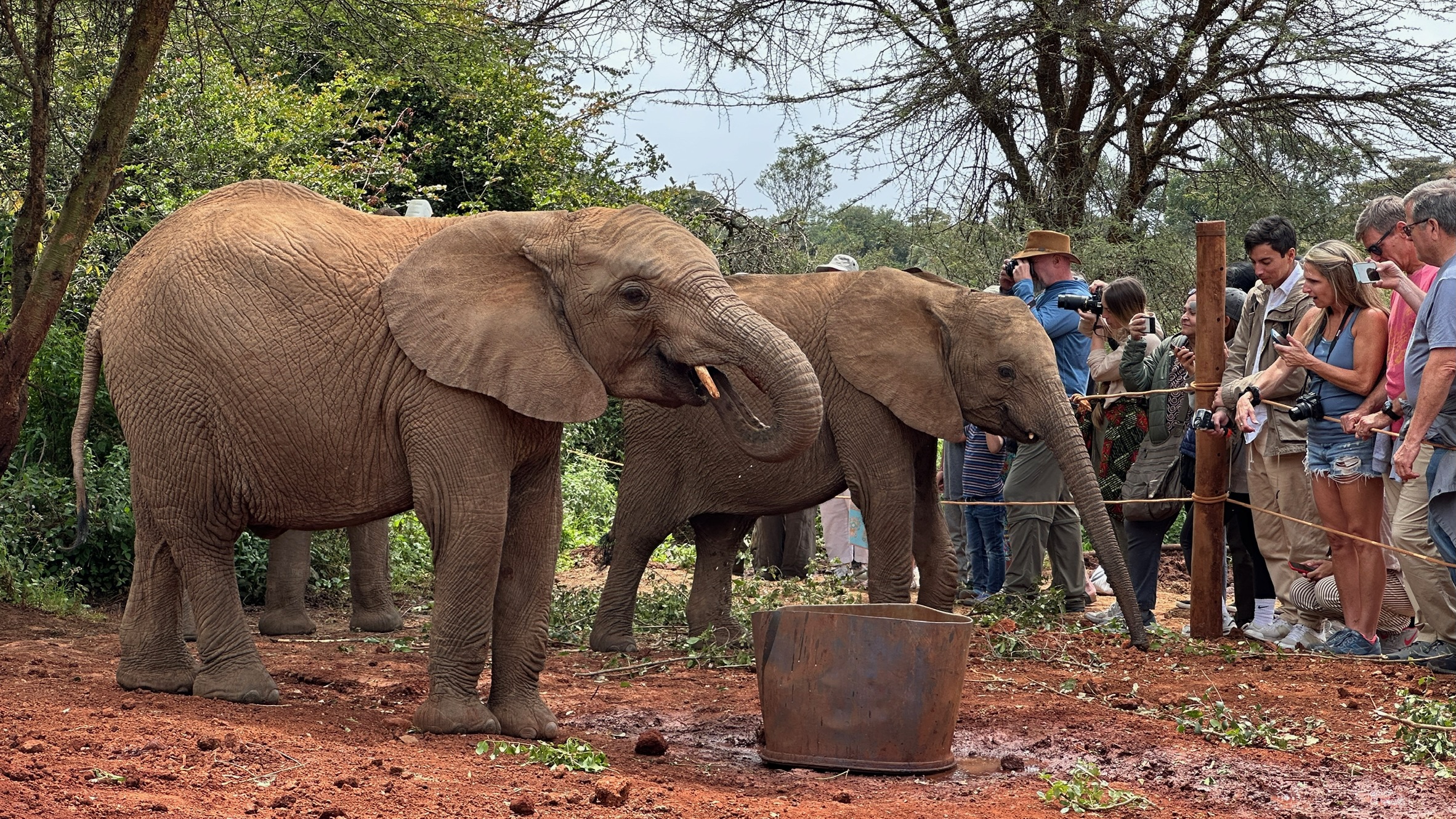
The David Sheldrick Wildlife Trust Nairobi Nursery is a rescue facility for orphaned elephants being rehabilitated for eventual release back into the wild. The public viewing window is 11am to noon, seven days a week except Christmas Day, and that’s the only hour there is: if you miss it (or if you’re late!), you miss it. It can take a while to get through the National Park entrance, so give yourself plenty of extra time before 11am so you’re not late. You’ll also want to get there early so you can snag a good spot right up at the front (and maybe be able to touch the baby elephants if they brush by you!)
How to book
Book directly at sheldrickwildlifetrust.org/nursery-visit. No more walk-ins (that, unfortunately, is a thing of the past), and you need a confirmed booking to get past the KWS Mbagathi Gate, so book at least a few days ahead since slots fill on weekends and school holidays.
There are some organized tour companies that offer hotel pick-up for out-of-town guests. Since you have to pay the Nairobi National Park entrance fee anyway, it might be worth just turning it into a safari adventure day and exploring the national park while you’re at it (you paid for it!).
For a Kenyan family of two adults and two school-age children, the total is around KES 8,000. It’s not a cheap everyday thing but it’s a great experience to do at least once.
What to expect
The viewing area is an open clearing where keepers bring out the youngest elephants first; they’re playful, loud, and they roll in the mud. You’re not supposed to reach out to touch them, but if they walk past you, you’re allowed to pet them.
The whole visit is about 45 minutes to an hour, including the ride from the KWS gate to the nursery. You can also “adopt” an elephant for a minimum contribution of US$50 per year. Read here for more details.
Practical checklist: Arrive at KWS Mbagathi Gate at least by 10:30am. Have your KWS payment receipt on your phone. Have your SWT booking confirmation ready. Bring cash for the nursery donation because the SWT doesn’t take cards.
The Giraffe Centre: The Easy, Affordable, Any-Day Option
If the Elephant Orphanage requires a plan, the Giraffe Centre requires almost nothing. You can walk in any day between 9am and 5pm (no booking needed), pay at the gate by card or M-Pesa (cash isn’t accepted), and you’re inside within minutes. There are third-party booking sites but it’s really not necessary, and you don’t need a guide since everything’s written out well. The main part of the experience is feeding the giraffes anyway!
What it costs (2026)
Resident adult: KES 400
Resident child (3-12 years): KES 200
Non-resident adult: KES 1,500
Non-resident child: KES 750
Under 3: Free
A Kenyan family of four pays KES 1,200.
What to expect
There is a raised wooden platform where you feed the Rothschild giraffes by hand. Every ticket includes a bowl of feeding pellets. The giraffes come in close, and their tongues are absolutely enormous! We’ve seen some folks who put the feeding pellets in their mouth and “kiss” the giraffes but that has never been of interest to us 🙂 Most kids are either thrilled or briefly terrified, then thrilled.
A hidden gem we like to do every time we’re out that way is the free 38-acre nature trail across the road. For families with older kids who like nature, it’s definitely worth doing; there’s a beautiful stream to explore and it’s quiet.
Plan for 45 minutes to 1.5 hours depending on if you do the walking trail.
Tip: The Giraffe Centre and the Elephant Orphanage work well together in a single morning. Do the orphanage from 11am to noon, then drive 10 minutes to the Giraffe Centre. We usually head for lunch at Tin Roof Langata or Cultiva after.
Karen Blixen Museum: For the Right Child at the Right Age
The Karen Blixen Museum is the colonial-era farm of the author of Out of Africa, now run by the National Museums of Kenya. Admission fees were updated in May 2026:
Kenyan adult: KES 550
Kenyan child: KES 300
Kenyan resident / Rest of Africa adult: KES 1200
Kenyan resident / Rest of Africa child: KES 800
Non-resident adult: KES 2200
Non-resident child (under 16 years): KES 1200
Honest take: this works well for children who can handle a slow guided walk through an old house and are interested in history or wildlife imagery. For younger children, you may spend more time outside than in the house, but there’s lots of green space to run around and you can do a short forested walk to see some of the old machinery from the coffee farming days. It’s a five-minute drive from the Giraffe Centre, so it’s easy to add if the kids still have energy.
Kazuri Beads: Worth a Stop If You Have the Time
Kazuri Beads runs free workshop tours at their Karen headquarters. You can watch artisans make ceramic beads by hand, which holds attention for longer than you’d expect. There is also an on-site coffee shop serving Spring Valley Coffee and pastries from Soul Sisters Bistro, plus a retail space where you can buy pieces directly.
For younger children, the workshop is engaging for about 20 minutes. For older kids who are into art or craft, the jewellery-making class (booked separately) is a genuinely good activity. The coffee situation makes it worth stopping for parents regardless.
Open Monday to Saturday.
Where to Eat in Karen
Karen has solid options for lunch or an early dinner after a morning of animals. A full guide to Karen restaurants is coming to this blog shortly.
For now, the short list: Tin Roof (there are two branches; the Langata one has a better playground and is closer to Giraffe Center); Cultiva has a relaxed outdoor setup that works well with children though they don’t have a playground. Their food and cocktails are delish! They get really busy so best to book in advance.
Getting to Karen: What to Know
Karen is about 12-15 km from central Nairobi, but the drive can take 30-40 minutes from Westlands or Kilimani depending on traffic. From Karen itself, the Giraffe Centre and Elephant Orphanage are a 5-10 minute drive apart.
Bolt or Uber works fine for both. If you’re driving, parking at both attractions is free.
The Honest Verdict
The Elephant Orphanage and the Giraffe Centre are two “must do at least once” with children in Nairobi. The Giraffe Centre is accessible and affordable (although, if your kids are in a Kenyan school, they’ll also most likely go with a school field trip at least once too :).
The combination of both in a single morning, followed by lunch in Karen, makes for a complete day out without having to drive halfway across the city.
Best for: Children of almost any age. The Elephant Orphanage works from around age 3 upward. The Giraffe Centre works even with toddlers.
What to skip: On a tight schedule or with very young children, leave the Karen Blixen Museum for another day.
Frequently Asked Questions
How much does it cost to visit the Elephant Orphanage in Nairobi in 2026?
Kenyan residents pay two separate fees. The Sheldrick Wildlife Trust nursery donation is KES 2,000 per adult and KES 500 per child, paid in cash on arrival. The KWS Nairobi National Park entry fee is KES 1,000 per adult and KES 500 per child, paid online in advance at kwspay.ecitizen.go.ke. A family of two adults and two children pays around KES 8,000 total.
Do you have to book the Elephant Orphanage in advance?
Yes. Walk-ins aren’t allowed. Book at sheldrickwildlifetrust.org. Have your booking confirmation ready at the KWS Mbagathi Gate. Book at least a few weeks ahead, especially during school holidays and weekends.
How much does the Giraffe Centre cost for Kenyan residents in 2026?
KES 400 per resident adult and KES 200 per resident child aged 3-12. Children under 3 are free. Cash isn’t accepted; pay by card or M-Pesa at the gate. The centre is open daily from 9am to 5pm, no advance booking required.
Can you visit both the Elephant Orphanage and the Giraffe Centre in one day?
Yes. The orphanage runs from 11am to noon. The Giraffe Centre is about 10 minutes away and open until 5pm. Visit the orphanage first, then go straight to the Giraffe Centre. Both fit easily into a single morning.
How much does the Karen Blixen Museum cost in 2026?
KES 550 for Kenyan adults and KES 300 for children, as of the revised National Museums of Kenya fees effective May 7, 2026.
Is a day in Karen worth the drive from central Nairobi?
Yes. Plan the morning around the 11am Elephant Orphanage slot, add the Giraffe Centre immediately after, and have lunch in Karen. You’ll be back home by early afternoon with a full day behind you.
In 2010, I told my husband that shave ice was a viable business in Nairobi. He was skeptical and asked reasonable questions. I just also happened to be right. 😛
16 years later, Hapa Shave Ice is open in Lavington and Nyali. Our kids have watched us build it from scratch: the early mornings, the syrup-making, and the floor mopping. I love that they have been watching us try to make entrepreneurship work and I hope they will internalize that if you want something bad enough, you can make it happen.
I started this blog for the same reason. The thing I wanted did not exist, so I made it.
There isn’t an updated guide to family life in Nairobi written for families who actually live here. Yes we all know and love Karura forest. But you can’t go there every weekend. What else is there to do? The content online that exists is aimed at tourists or people who need the city explained to them. That knowledge has been living in WhatsApp DMs for years but I think it belongs somewhere more findable.
Here is what you will find
School holiday guides with KES prices
Family road trips we have actually done
Restaurants we keep going back to
Recipes that work with what you can buy locally
A guide to getting Kenyan citizenship, which I have been meaning to write for years
I grew up in Honolulu and have called Nairobi home since 2010. I have two kids in school, a shave ice shop in Lavington and one in Nyali, and the blog reflects all of it.